
Credit Valley Hospital exemplifies how architecture mediates allostatic load
By clearly indicating opportunities for rest, the built environment can nudge you towards health promoting actions that can reduce stress
By shaping ongoing sensory input, effort of orientation, and perceived predictability, architectural environments systematically modulate chronic allostatic load; high coherence, safety, and positive stimulation reduce allostatic load, while low quality environments increase it. Allostatic load can be defined as the wear and tear on the human body from consistent exposure to high stress.
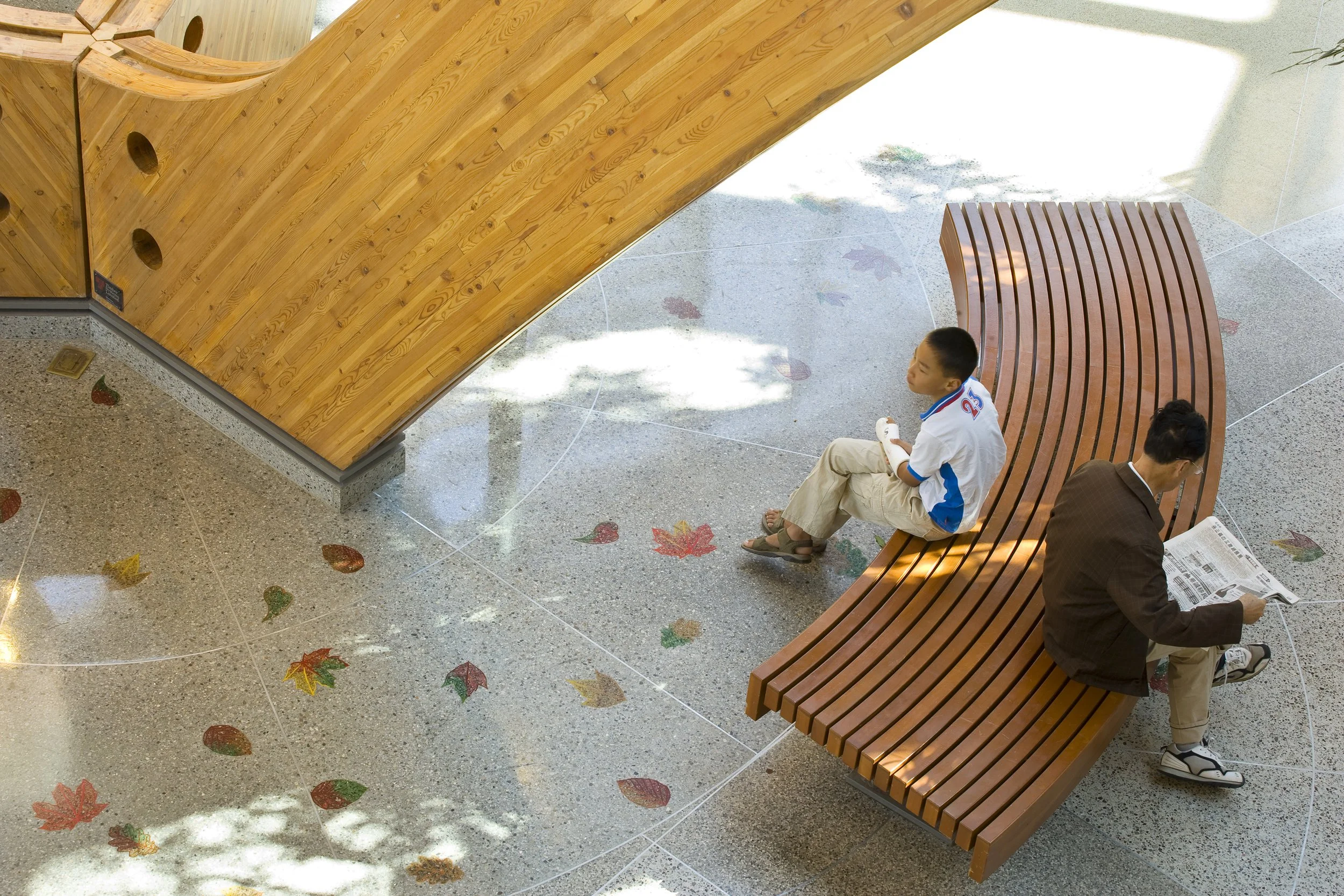
View of seating space at Credit Valley Hospital atrium, photographer: Tom Arban
In this process, clearly legible affordances (eg. for rest, retreat, movement, and control), supported by consistent signifiers and environmental nudges that gently cue restorative or health promoting actions, reduce cognitive and emotional effort, whereas ambiguous or misleading cues function as chronic micro stressors.
Environmental enrichment directly influences these pathways by engaging neuroplastic systems associated with sensory diversity and positive challenge, thereby counteracting stress-related physiological wear. The meaning people assign to environmental cues determines their emotional and physiological response; enriched, coherent contexts expand interpretive flexibility and promote adaptive emotional construction. Environments offering achievable, visible routes to everyday goals sustain hope under stress, while stable, positively valenced settings that people emotionally construct as safe foster place attachment and buffer allostatic load through felt continuity and predictability.
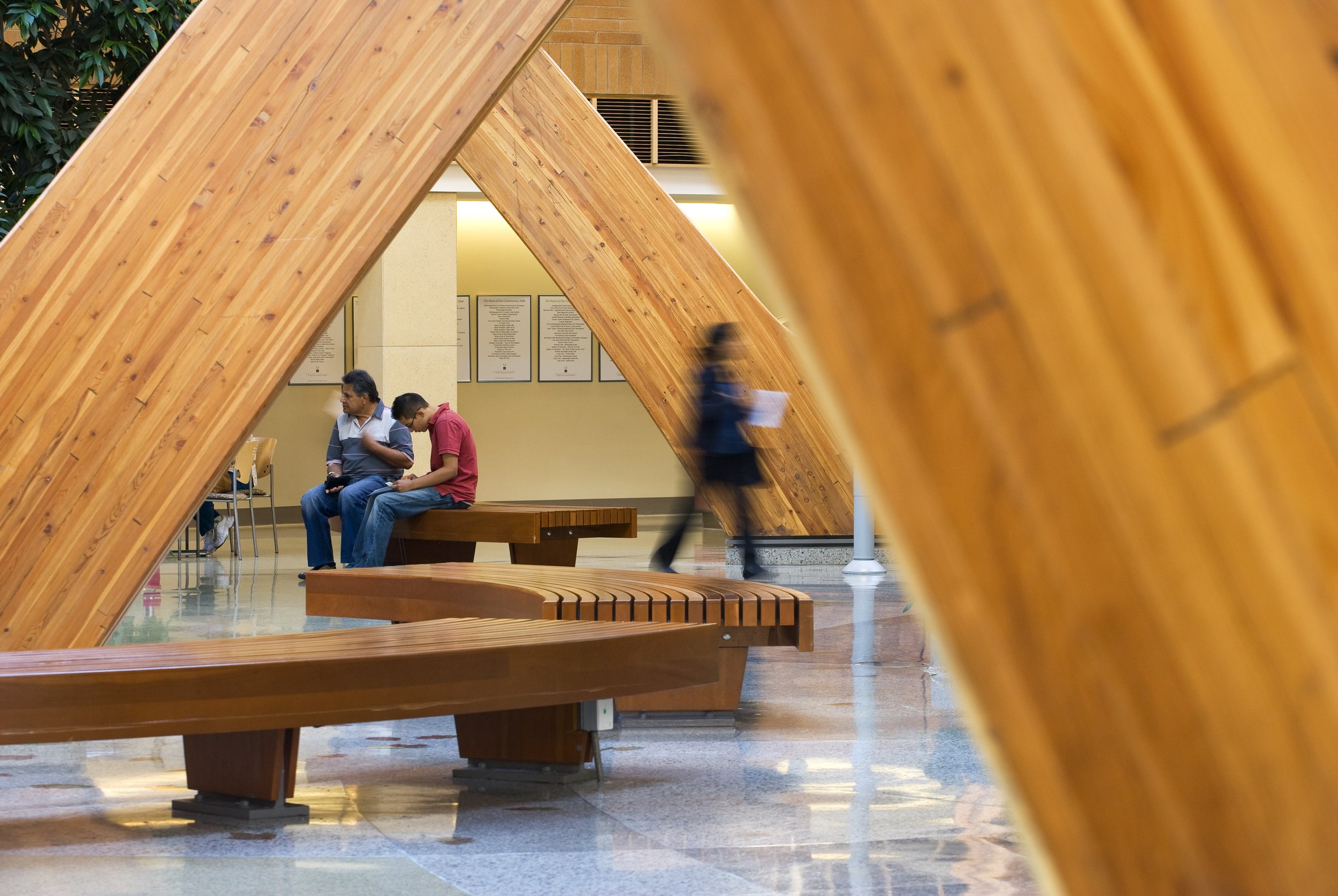
View of seating space at Credit Valley Hospital atrium, photographer: Tom Arban
By clearly indicating opportunities for rest, the built environment can nudge you towards health promoting actions that can reduce stress. The Credit Valley Hospital atrium is an example of this mediation as the tree-branch-like columns offer a shaded and still zone for relaxation, reinforced by gentle signifiers such as fallen-leaf terrazzo floor details. In the high-pressure hospital environment, this signifier for rest can suggest refuge and relaxation.