
Emotions and The Built Environment
The more aware of the body’s interoceptive signals, the more powerful our emotional experiences will be. We can then interpret these emotions in order to decide on a suitable response to the state of our surroundings.
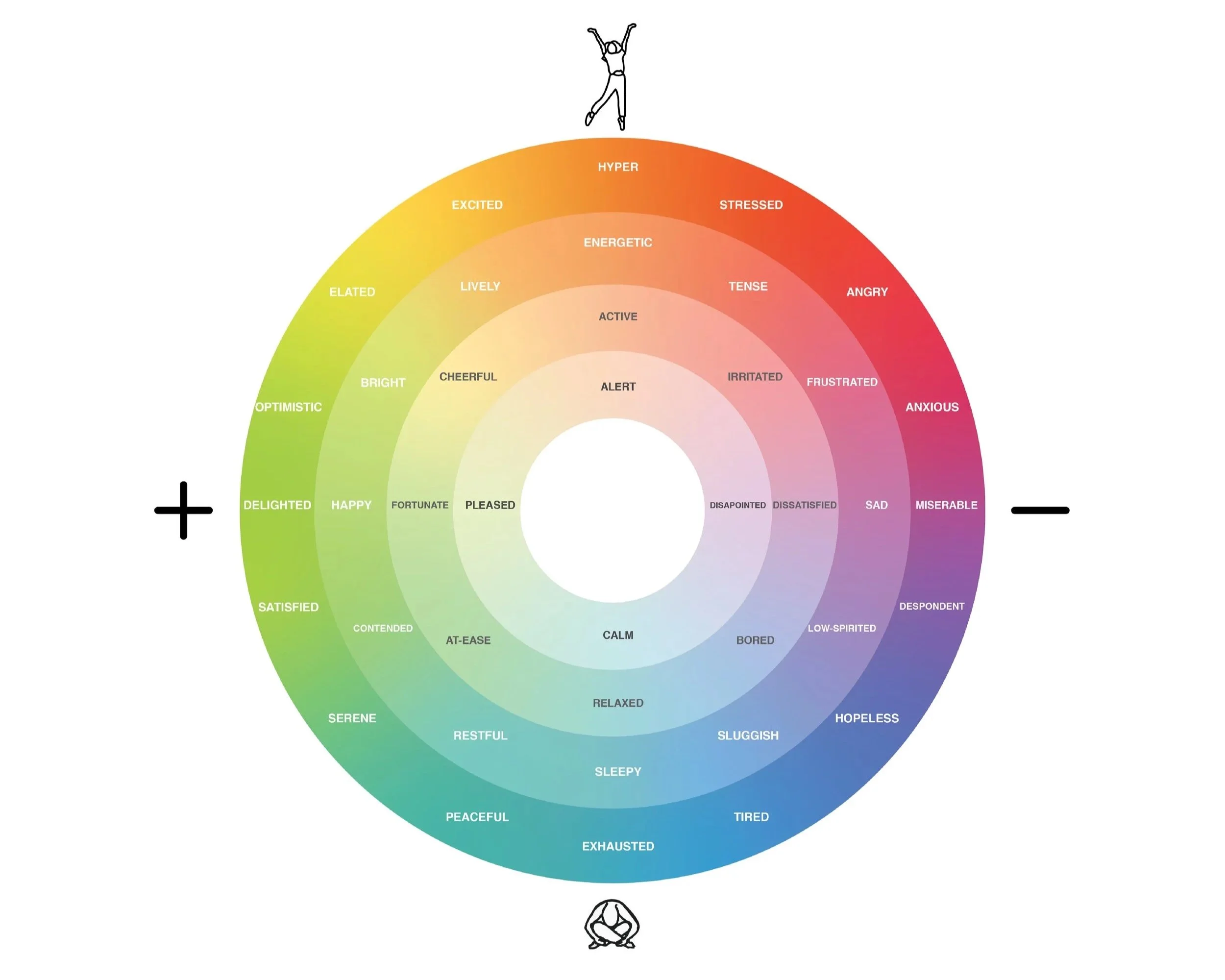
James Russel’s Circumflex Model, from Constructing Health
The human body interprets signals from exterior sources, called exteroceptive signals, internal sources, called interoceptive signals, and from the surface of the body, called proprioceptive signals.
Emotions are communications that the interoceptive (internal) body sends to the mind. They are physiological changes to the body such as a pounding heart, sweating trembling, muscle tension, or a tight feeling in the gut. These changes are then sent to the brain through the cerebral cortex as a response to the state of the environment around us. The more aware of the body’s interoceptive signals, the more powerful our emotional experiences will be. We can then interpret these emotions in order to decide on a suitable response to the state of our surroundings.
Human emotions arise from the core somatic nervous system, which relays sensations from the body to the central nervous system and brain. Emotions enrich our mental state, facilitate social reactions and communication, influence rational behaviours, and help us to escape danger or approach pleasure.
James Russell’s circumplex model diagrammatically represents all emotions where valence (the range of positive to negative emotions) is shown on the horizontal axis, and arousal (the intensity of the emotions) is shown on the vertical axis.
This model can be applied to neuroarchitectural studies to understand, qualitatively, the effects that the built environment can have on the human body. Individuals can map their emotions on the circumplex model while moving through a building, allowing researchers to pinpoint where and how the body is influenced.