
Introduction to the Architectural Determinants of Health
The Architectural Determinants of Health (ADoH) model explains how the places we live, work, and gather actively shape our health. The way that buildings are designed, occupied, and navigated, how safe and welcoming they feel, and how they connect to us to one another, all influence our physical and mind health.
Poorly designed spaces can lead to confusion, isolation, and chronic stress. Natural light, acoustic quality, understandable layouts, comfortable materials, and access to nature, however, can lower stress, boost mood, improve focus, and strengthen a sense of meaning and belonging.
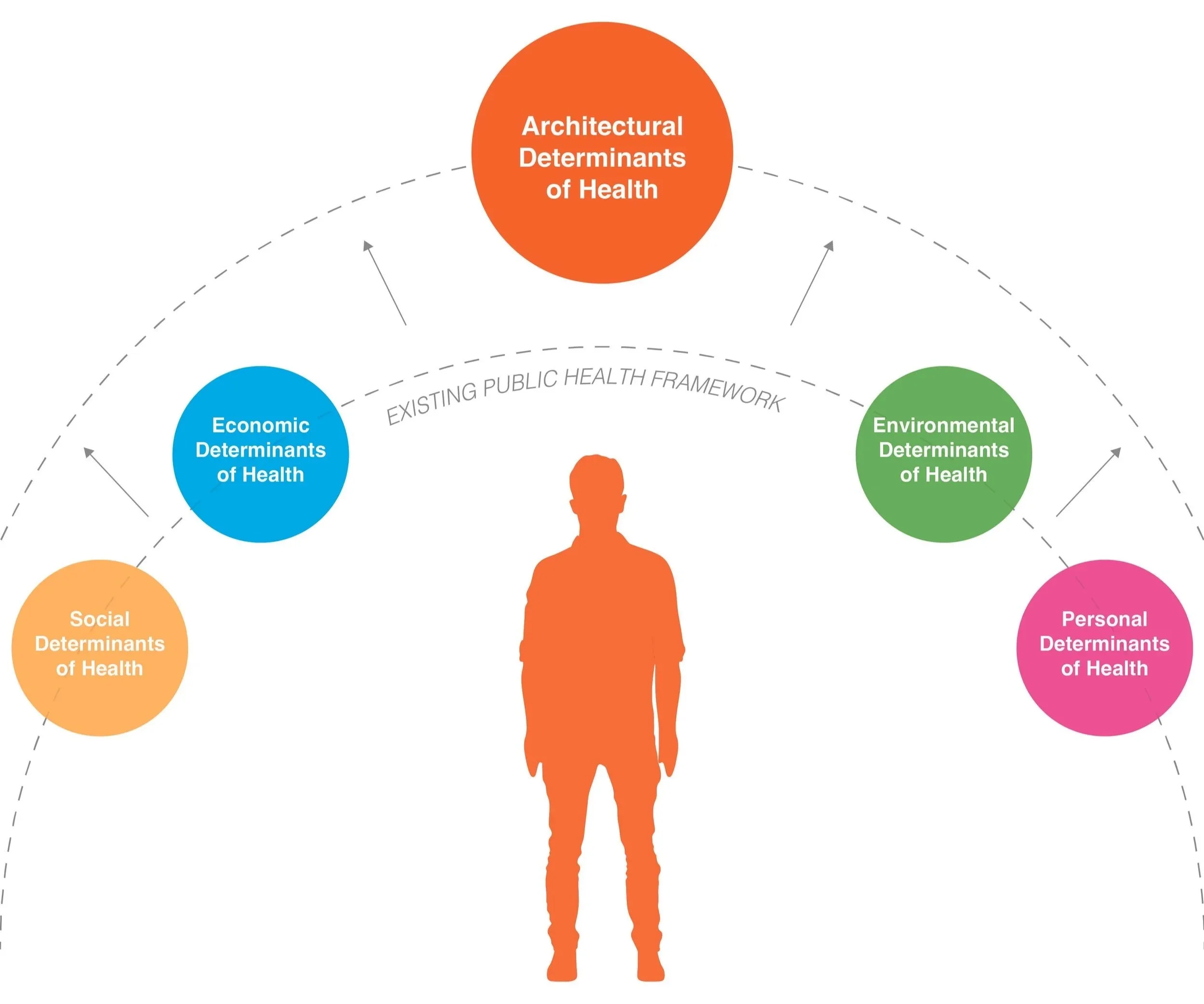
Architectural Determinants of Health within existing public health determinants frameworks
Existing public health frameworks, including those posed by the World Health Organisation, focuses on the measurable social, economic, personal, and environmental factors of health. The ADoH model prompts the inclusion of architecture itself as a measurable health factor, understanding that the designed environment can considerably effect stress, learning, recovery, and mind health.

There are seven core ideas within the ADoH model that show how everyday environments shape health:
1. Spatial patterns as health determinants: Our surroundings constantly send measurable signals that shape how we feel and function
2. Architecture modulates chronic allostatic load: The signals we receive can either heighten chronic stress or create the conditions for us to maintain our health and wellbeing over time
3. Sense of Coherence as a key psychological mediator: When environments nurture ease and balance, they deepen our sense that life is manageable, rich with meaning, and full of moments for growth and connection
4. Neurophysiological pathways link space and health: This strengthened inner stability helps our brains and bodies stay regulated, supporting overall balance, health, and wellbeing
5. Social-relational fields are architecturally scaffolded: These spaces also choreograph how we meet, relate, and feel supported by others, further influencing our wellbeing
6. Contextual dependency with constrained universals: While certain spatial patterns tend to nurture connection and calm for most people, they always need thoughtful tuning to local needs and cultures
7. Architectural determinants add explanatory power: Architectural features can reveal variations in health outcomes that extend beyond what traditional social or behavioral models explain
These seven core ideas form the Architectural Determinants of Health model, explaining how the designed environment influences human health. The ADoH model can be incorporated into existing public health frameworks to heighten the fidelity of human health determinants and acknowledge the important role that the built environment plays in human wellbeing.
To learn more about the architectural determinants of health, visit the knowledge hubhere