
Sustainable Design at the Sechelt Hospital
“The newly expanded St. Mary’s Hospital in Sechelt, British Columbia, harnesses innovative architectural techniques to inject daylight and First Nations influences into the facility,” – ReNew Canada
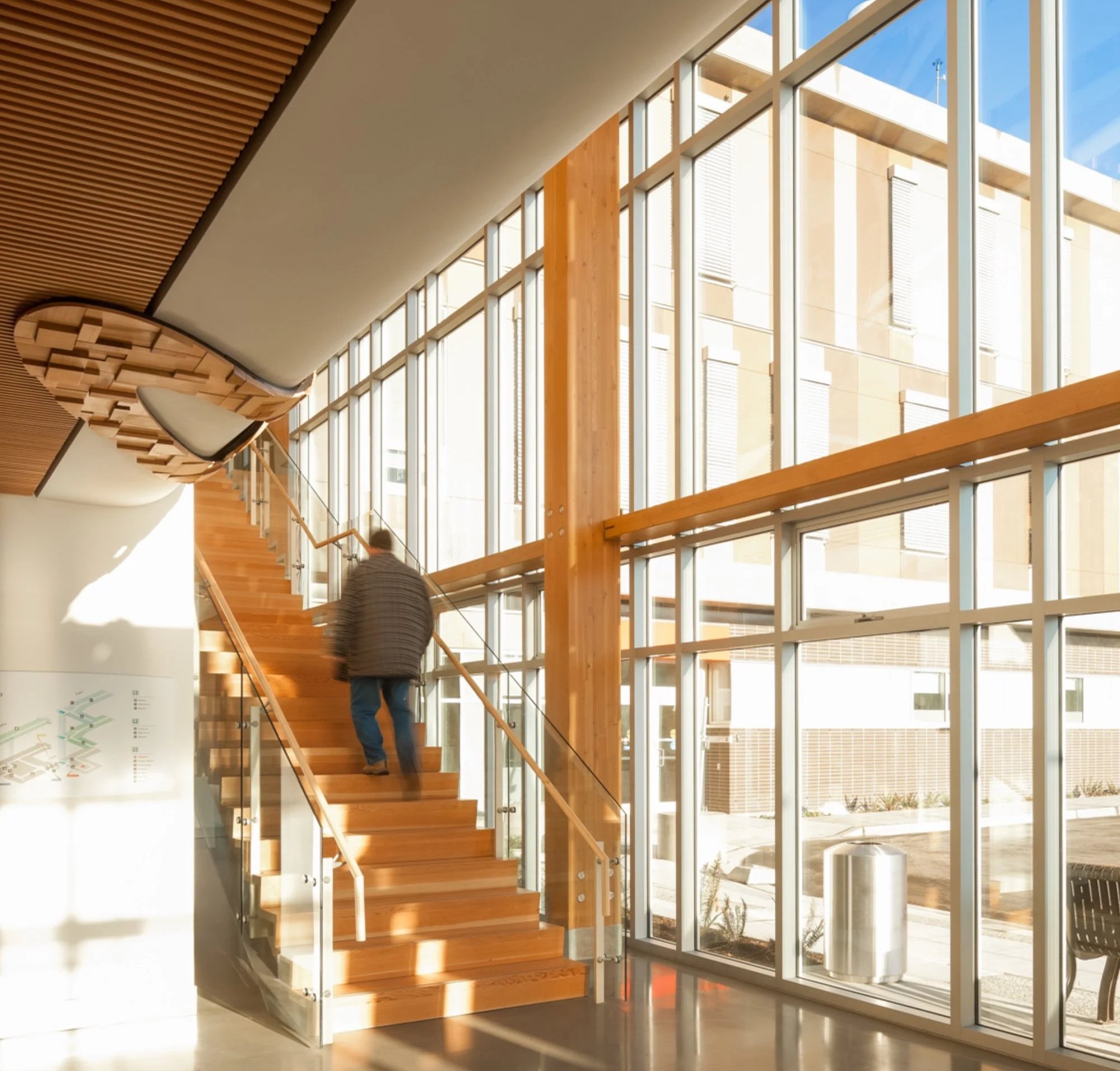
Interior view of new lobby at the Sechelt Hospital featuring timber construction, by Farrow Partners and Perkins + Will, photographed by Latreille Delage Photography
Sechelt Hospital was awarded the Sustainable Architecture and Building Award of Excellence in 2015 due to its environmentally conscious and salutogenic approach to healthcare design. The project is LEED Cold certified and at time of construction was North America’s first carbon-neutral hospital.
Sechelt Hospital employs a high-performance building envelope to ensure that temperature and vapour are regulated across the membrane, generating a comfortable internal healing environment. The hospital features 125 boreholes 250-ft deep to generate zero-carbon energy, heating and cooling the facility through radiant floor plates. Mounted to the roof of the facility are 19-kilowatt solar array panels to further contribute to the production of carbon-free energy on site.
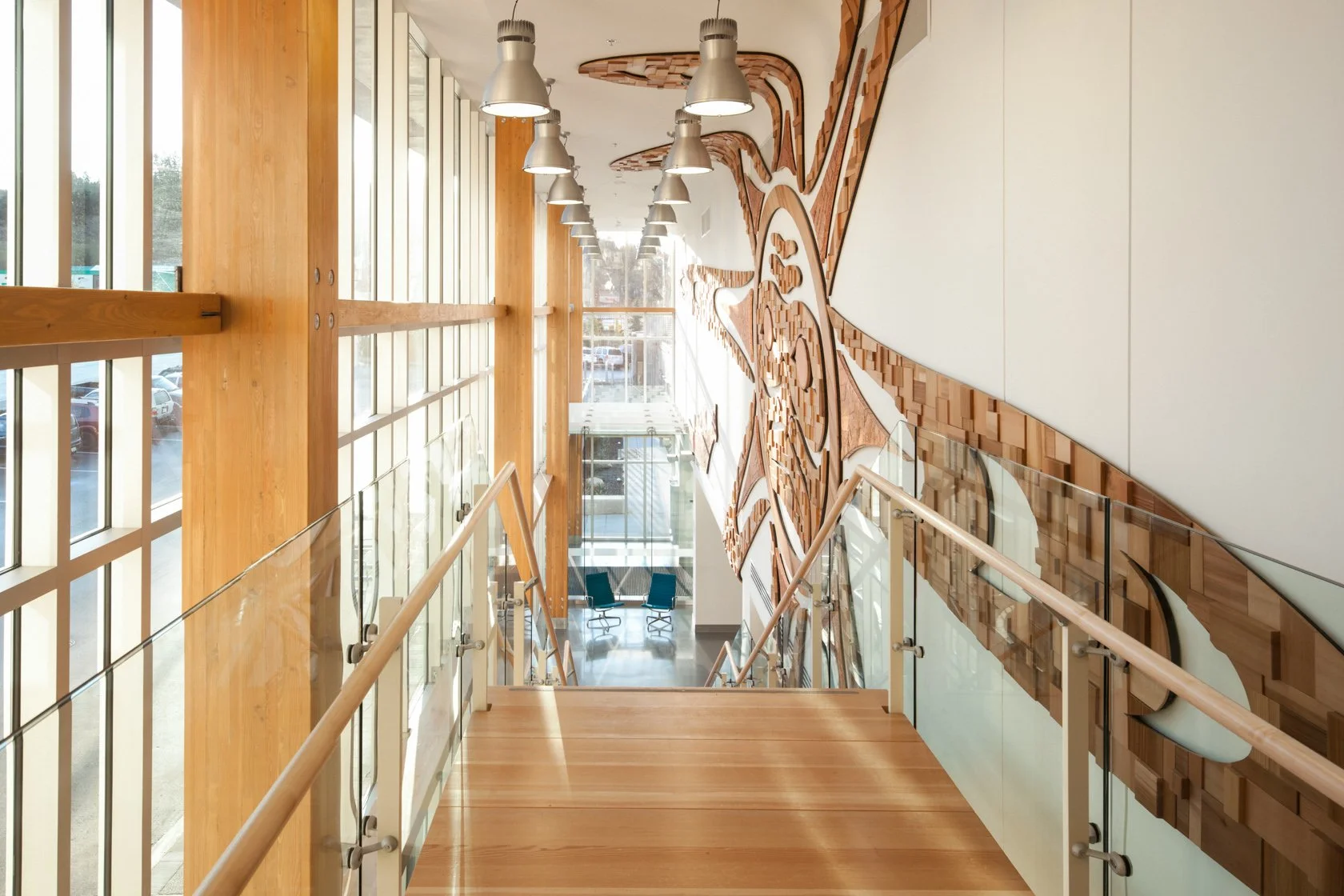
Interior view of new lobby at the Sechelt Hospital featuring the timber mural designed by Sechelt First Nation artist Shain Jackson, by Farrow Partners and Perkins + Will, photographed by Latreille Delage Photography
The green roof is covered with sedum tiles and fleece mats, creating a low-irrigation, vegetated plane that reduces solar heat gain. Climate specific planting surrounding the hospital eliminated the need for irrigation and subsequently reduces potable water use. Landscaping is composed of a combination of meadow grass and native bulb and seed cover, opposed to grass lawns. This water-conscious planting strategy allows stormwater in the heavy precipitation zone to move through the site without flooding.
New patient wings occupy narrow floor plates which allow natural light to enter the building from two sides. Operable windows feature in each patient room to provide passive ventilation as well as views to nature and access to daylight. The expansion’s beating heart is the new light-filled lobby and new entrance which features timber artwork by Sechelt First Nations artist, Shain Jackson. Timber is a primary material of the community space, contributing to the creation of a naturally inspired environment.
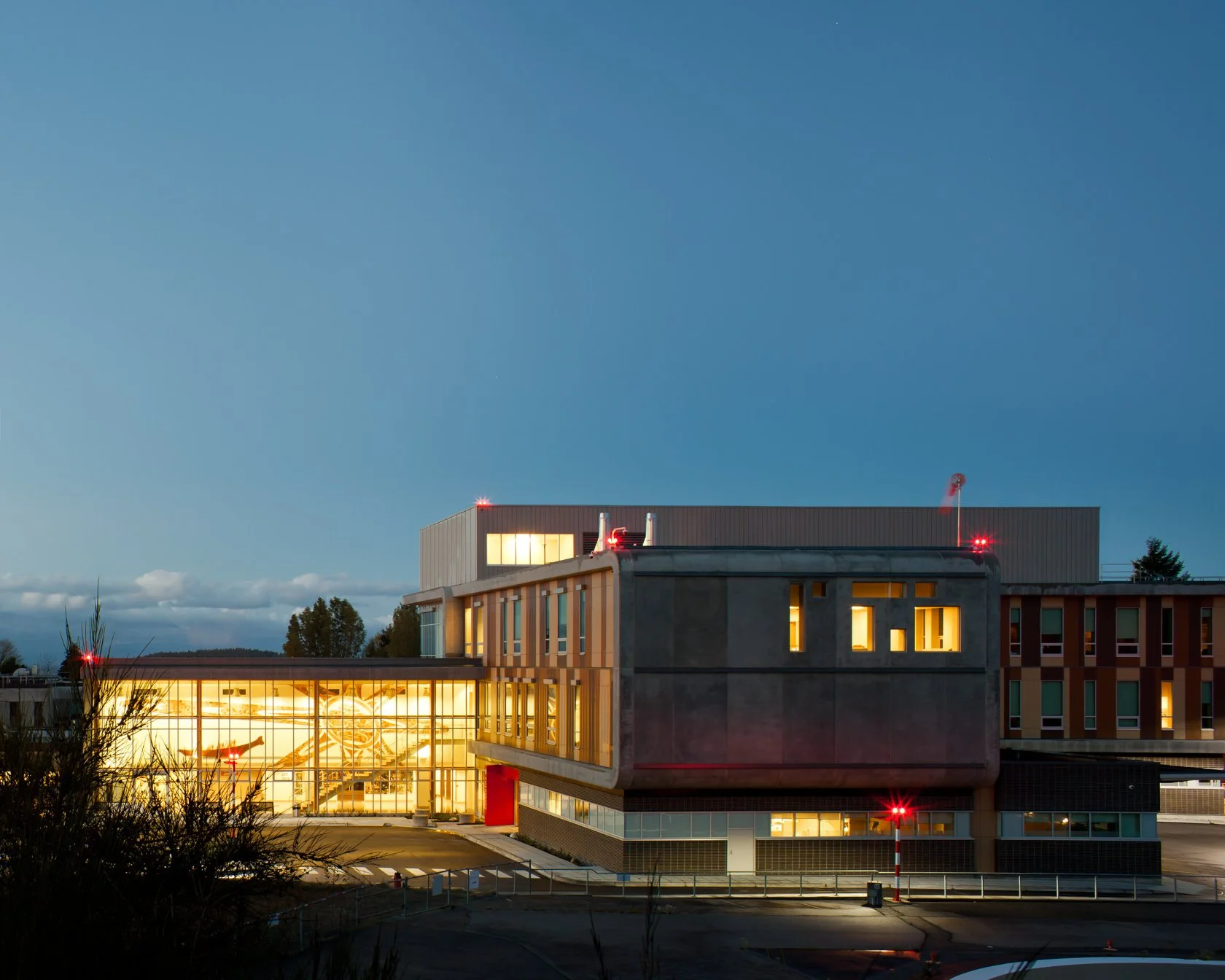
Exterior view of the Sechelt Hospital by Farrow Partners and Perkins + Will, photographed by Latreille Delage Photography
ReNew Canada praises the design of the Sechelt Hospital, stating that “the newly expanded St. Mary’s Hospital in Sechelt, British Columbia, harnesses innovative architectural techniques to inject daylight and First Nations influences into the facility.” Contact with natural spaces and daylight during a time of healing can offer patients respite and cause health by lowering stress levels, blood pressure, and improving cognitive function. The quality of space has a significant impact on human health and wellbeing, by taking a salutogenic approach to healthcare design, architecture can be leveraged to cause health.
To learn more about how architecture can determine health, visit the Knowledge Hub here.