
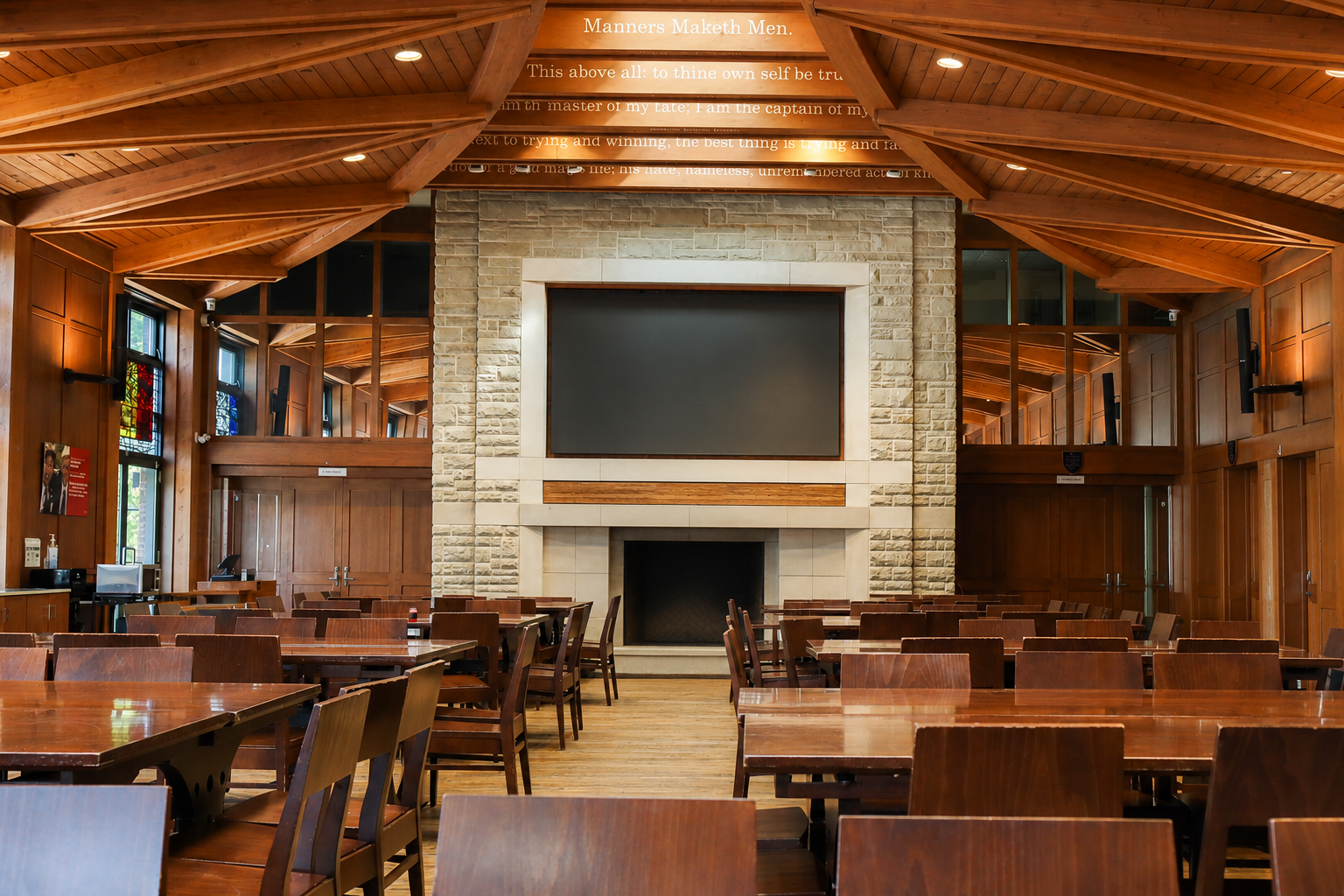
Ketchum Hall at Royal St George’s College
The built environment has the power to dictate human health, and as designers of the built environment, architects act as public health professionals. Tye Farrow is currently undertaking a PhD at the University of Toronto’s Dalla Lana School of Public Health. The focus on his doctoral studies is the development of the Architectural Determinants of Health model which poses that certain qualities of architecture can determine health outcomes.
As part of the ADoH development, a scoping review of existing determinants of health literature was composed, determining the gap in research which the ADoH model aims to fill. The review also positions the ADoH model within the existing determinants of health frameworks determined by the World Health Organisation and Public Health Agency of Canada. For more information on the scoping review, read our article on the Architectural Determinants of Health Model Development.
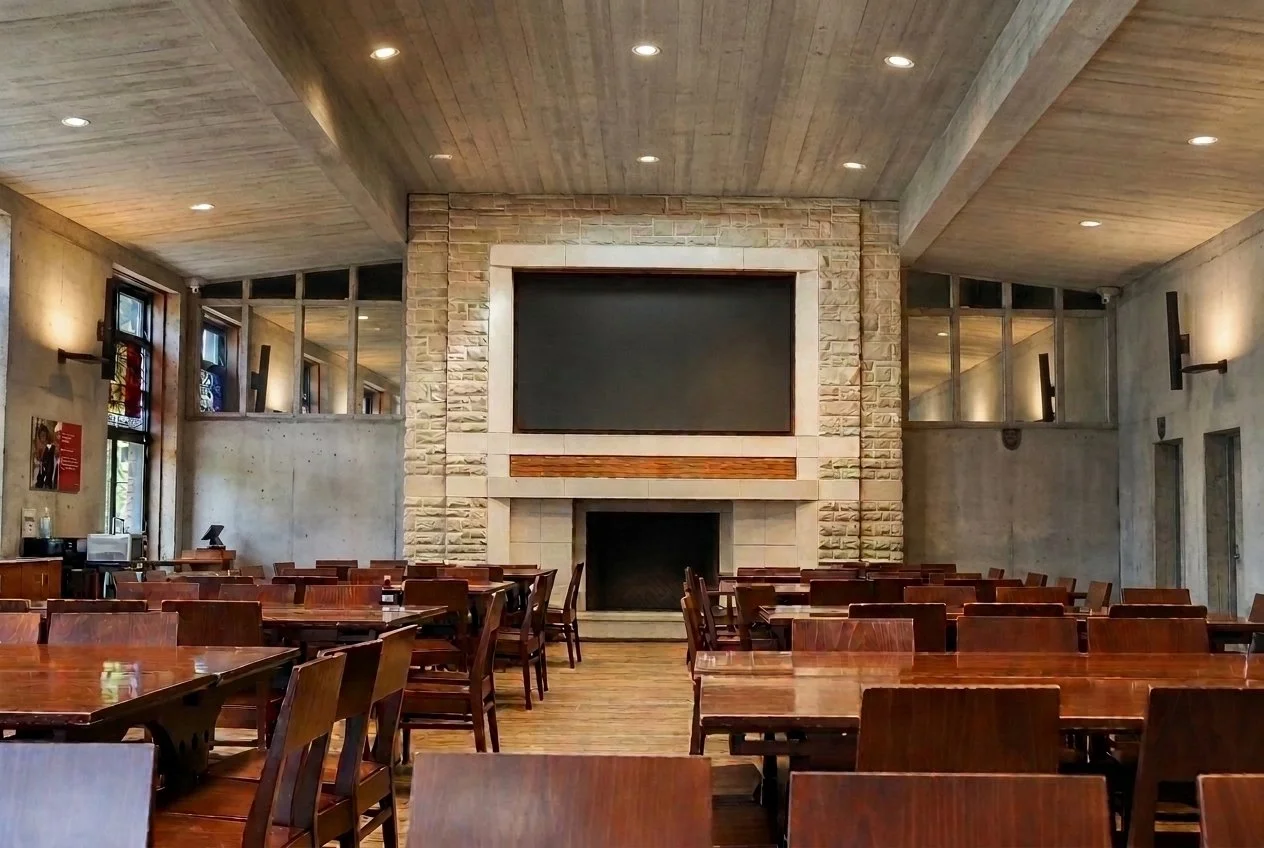
Ketchum Hall at Royal St George’s College in concrete variation
The ADoH model proposes a perceptual-sensory pathway, which is being tested through the Material Variation, Architectural Form, and Visual Stress study conducted by Tye Farrow and Dr. Cleo Valentine. It examines whether material variations within otherwise comparable learning environments generate different levels of conscious preference and of predicted lower order visual processing demand.
The study uses Farrow Partners-designed learning environments such as Ketchum Hall at Royal St. George’s College and the dining hall at the Lauremont School Elgin Mills campus. The photos are run through rendering AI to change the materiality from their original timber to concrete and white drywall versions. The three versions are then shown to participants, asking which of the three environments they prefer. Mass timber was selected in 92.3% of the comparisons.
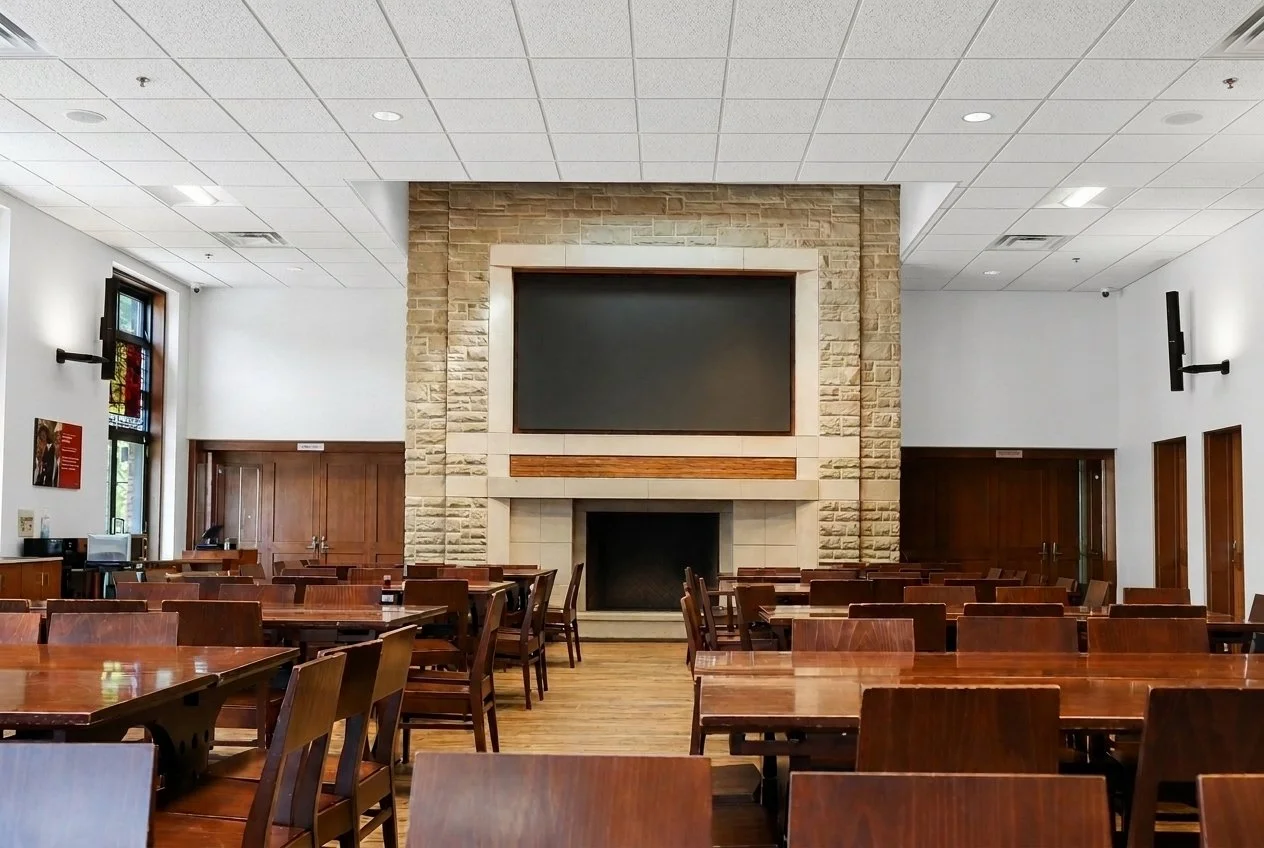
Ketchum Hall at Royal St George’s College in white drywall variation
Highly repetitive and high-contrast patterns can concentrate visual energy causing discomfort, strain, and perceptual distortions. Black and low-contrast surfaces are under stimulating and experientially impoverished which can cause discomfort. Many natural materials, such as timber, fall in-between these extremes, striking a balance to provide visual stimulation without being overwhelming. This is because the visual information of the material is distributed across scales and orientations rather than concentrated in repetitive and high-contrast patterns.