
Wellness-Inspiring Spaces for the Aging Community
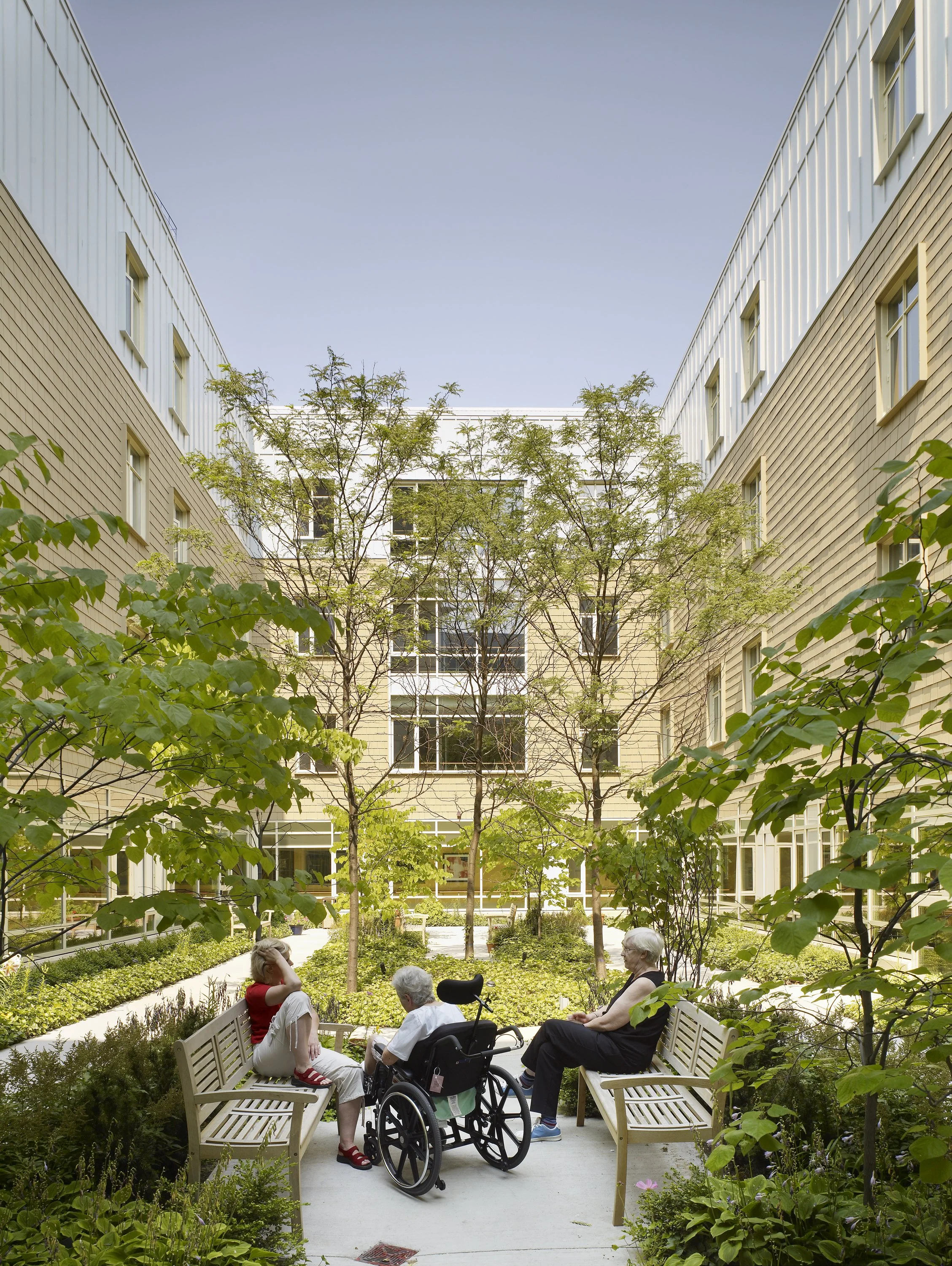
Courtyard at Wellesley Central Place, Toronto, by Farrow Partners, Photographed by Tom Arban
Hospices, long-term care facilities, nursing homes, and dementia care all provide health and social support for the aging community. This end-of-life care can bring about feelings of uncertainty, loss of dignity, and a decline in wellbeing. The built environment can instead, uplift individuals and enhance health during a critical transition in an individual’s home life. Salutogenically designed long-term care environments can maintain resident autonomy, increasing social interaction and engagement, and relieving stress and anxiety to support residents and families through the transitory nature of life.
Connection to nature in long-term care design can act as a non-invasive therapeutic technique to reduce stress and anxiety. Natural ventilation can enhance air quality indoors and instil freshness within the space. Patios, terraces, gardens, and outdoor leisure spaces can offer therapeutic experiences and opportunities for meditation and relaxation. Incorporating a diverse array of grounding textures, planting, and the use of natural finishes can be stimulating, bringing awareness to the body and instilling a sense of calm. At the Wellesley Central Place in Toronto, a central courtyard with lush planting is surrounded by a main circulation route., providing outdoor leisure space and maintaining a connection to the outdoors by drawing natural daylight inside.
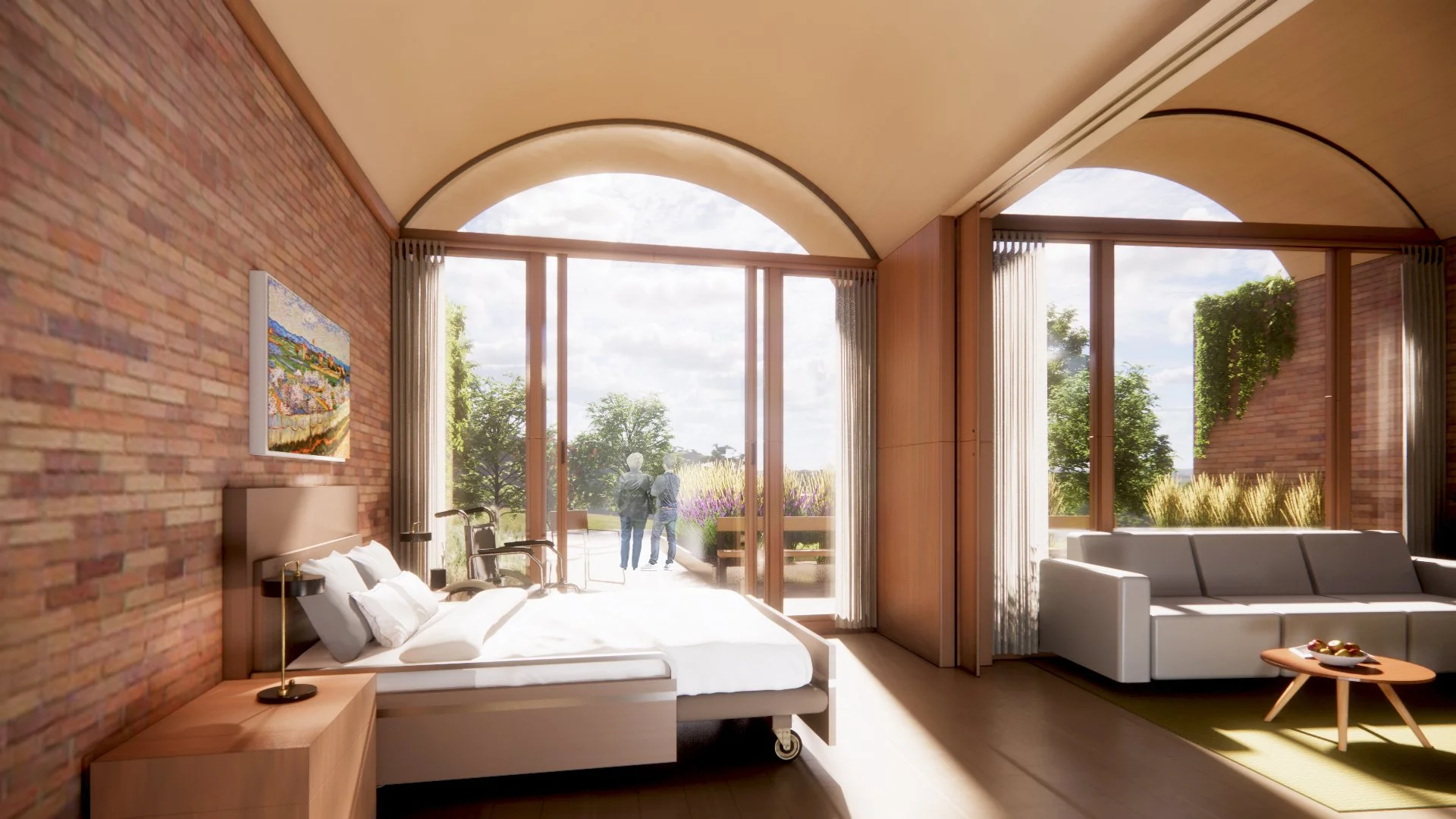
Resident room with family lounge at Oakville Hospice by Farrow Partners
Large-scale institutional care facilities are being phased out in preference to small-scale, homelike environments for end-of-life care. The clinical and monotonous environment of large institutions lacks the personal connection, scale, and warmth that foster wellbeing. In small-scale facilities, like the Oakville Hospice, social engagement and interaction with other residents, staff, and families are more likely due to the approachable scale and familiar environment. In-unit family space, intimate homelike amenities, and common eating and dining spaces encourage community engagement and reinforce resident support systems during a difficult time.

Plan of Netherlands Norwich Community by Farrow Partners
When residents transition to long-term care to receive healthcare support, a loss of autonomy is commonly experienced. Leaving the home environment that one is familiar with and has complete authority over, can be a challenging adjustment. To maintain a sense of autonomy while ensuring resident safety, architecture can suggest choice and decision making. This can build resident-staff relationships and instil a sense of trust and independence. At the Netherlands Norwich Community, independent living options are available in size four-plex buildings arranged like a village. This recognisable urban layout and comprehensible domestic space encourages residents to make choices and personalise their own space and routine.