
Journal of Biophilic Design Feature
“Why timber should be seen as a non-invasive therapeutic treatment in Healthcare and Educational spaces”
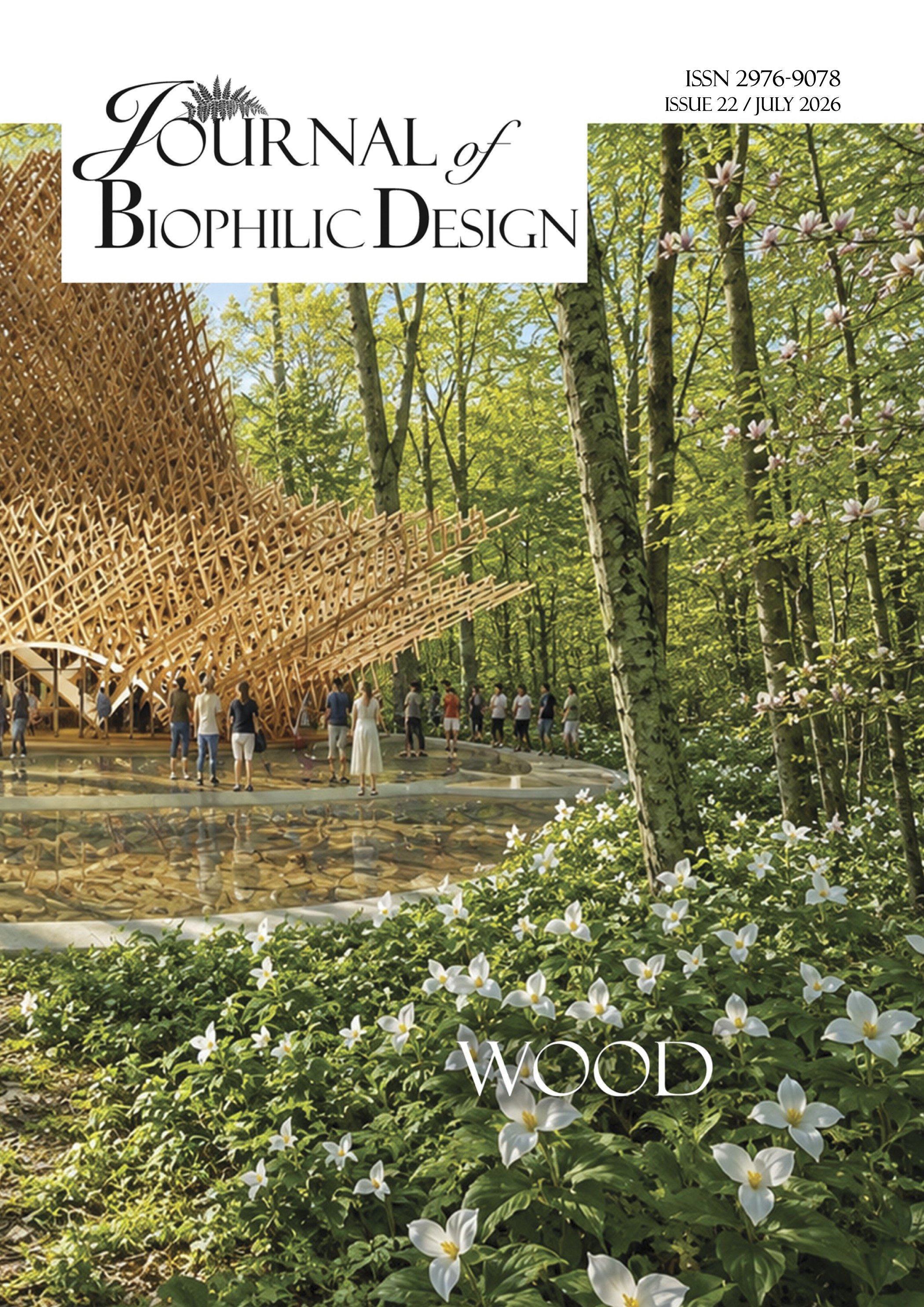
Cover of Journal of Biophilic Design, Issue 22, featuring Forest Temple by Farrow Partners
The cover of the Journal of Biophilic Design features the Forest Temple, by Farrow Partners, for its 22nd issue. The cover is accompanied by an article, written by Tye Farrow and Kiana Gemmell, about the use of wood as a non-invasive therapeutic tool to enhance human health.
Architectural materials should be imagined as non-invasive therapeutic treatments, acting as a nutrient for the humans who inhabit the space. In healthcare and educational environments, the wellbeing of staff, families, and patients, as well as students and educators, is paramount. Using timber, these environments can enhance physiological and psychological health to improve performance, reduce stress, and inspire hope.
The article cites a selection of neuroarchitectural studies, proving timber’s ability to enhance health. The body of neuroarchitectural research is often theoretical, experimental, and/or data heavy making. The spatial and atmospheric qualities that generate health discussed in the literature are therefore underrepresented.
Farrow Partners translates relevant neuroarchitectural research into spatial conditions, exemplified in its portfolio of healthcare and educational projects. The Journal of Biophilic design article highlights several Farrow Partners projects that employ timber to achieve non-invasive therapeutic effects, including Credit Valley Hospital, Helmsley Cancer Centre, and Ketchum Hall at Royal St. George’s College.
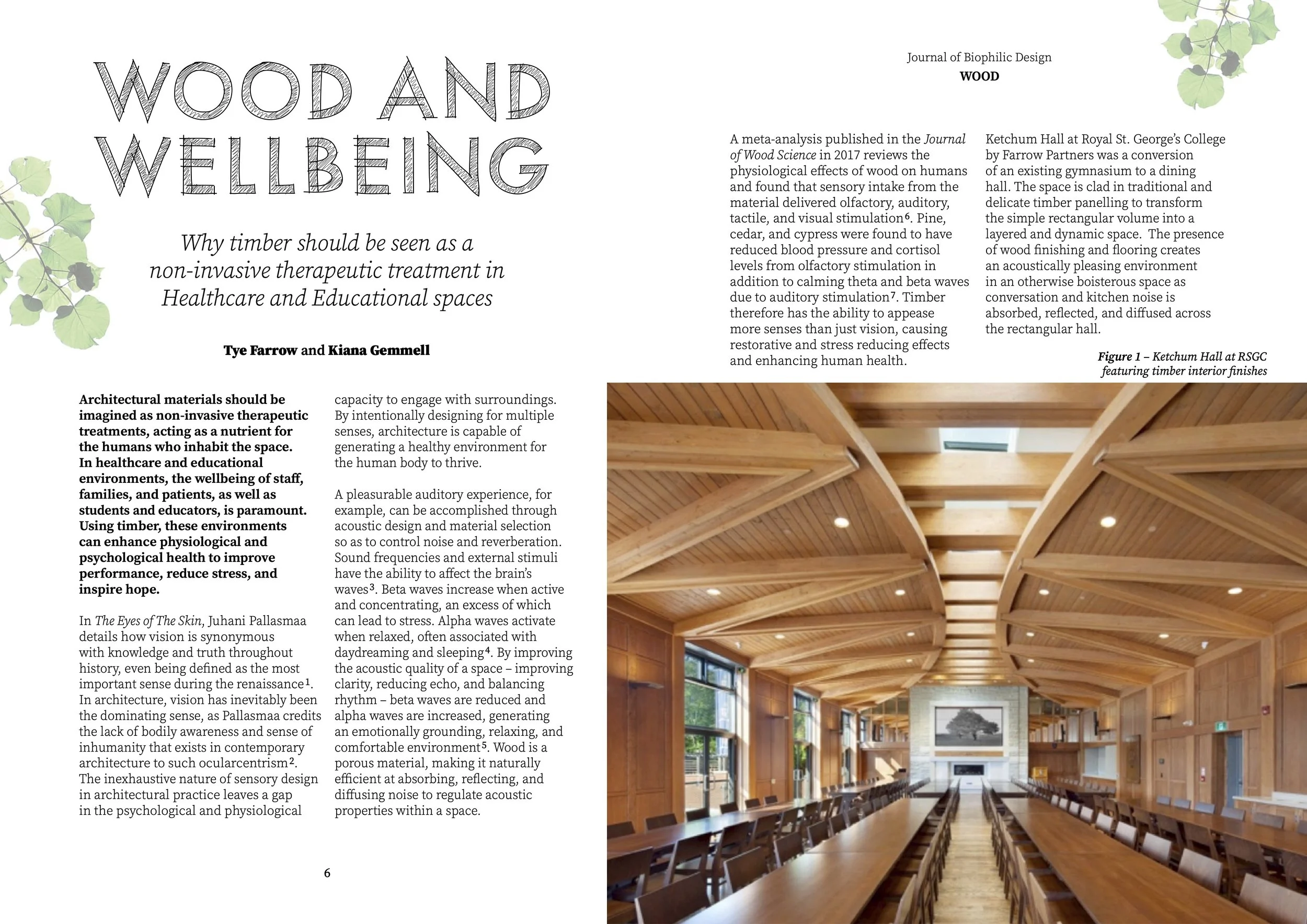
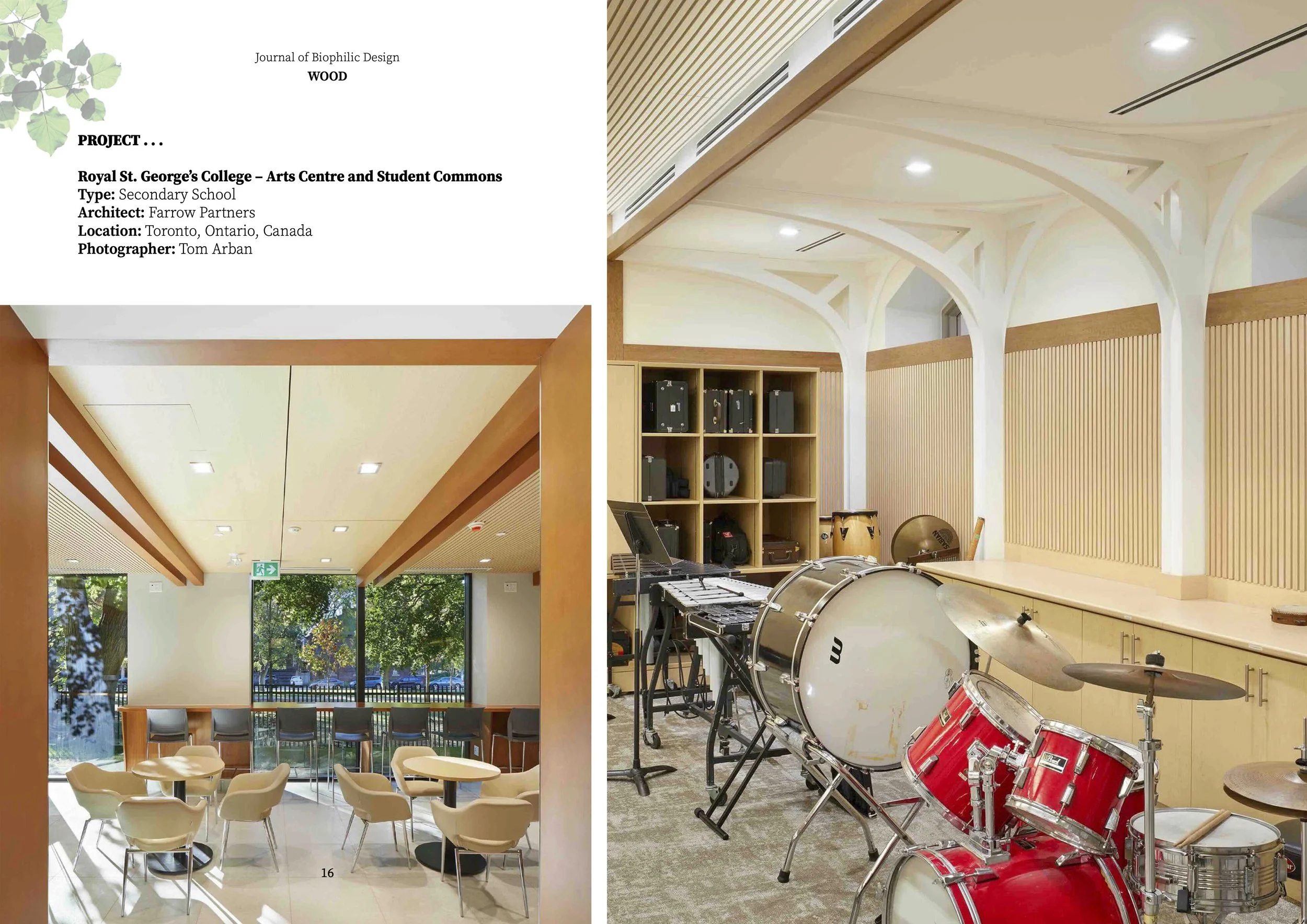
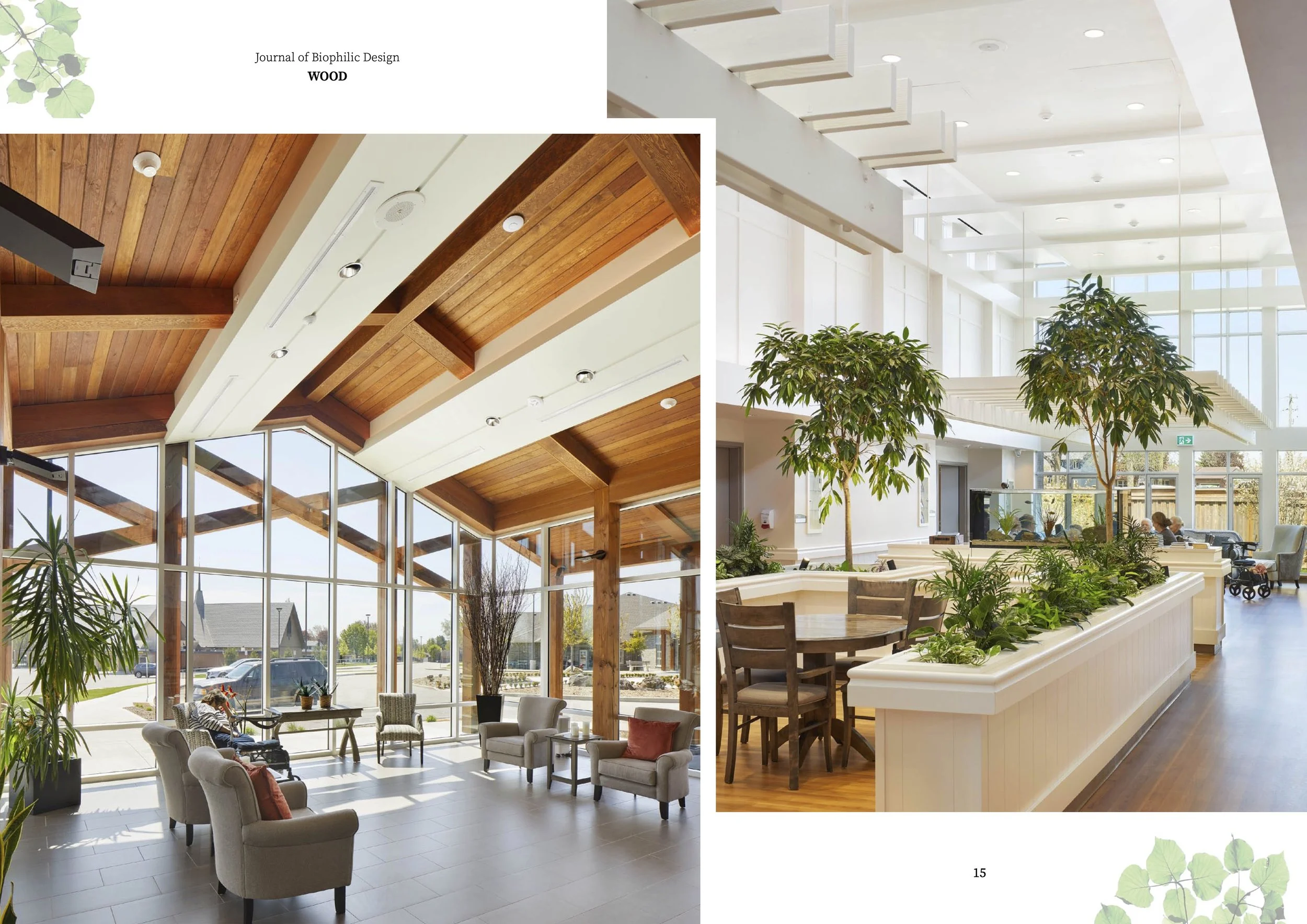
To learn more about the health-enhancing effects of wood in healthcare and educational environments, read the Journal of Biophilic Design article here (https://journalofbiophilicdesign.com/journal-of-biophilic-design-1) and look through our projects to discover how health-enhancing research is infused into our work.