
“What we know is that spaces fundamentally shape the way we think, the way we learn, the way we interact, and the way we feel”
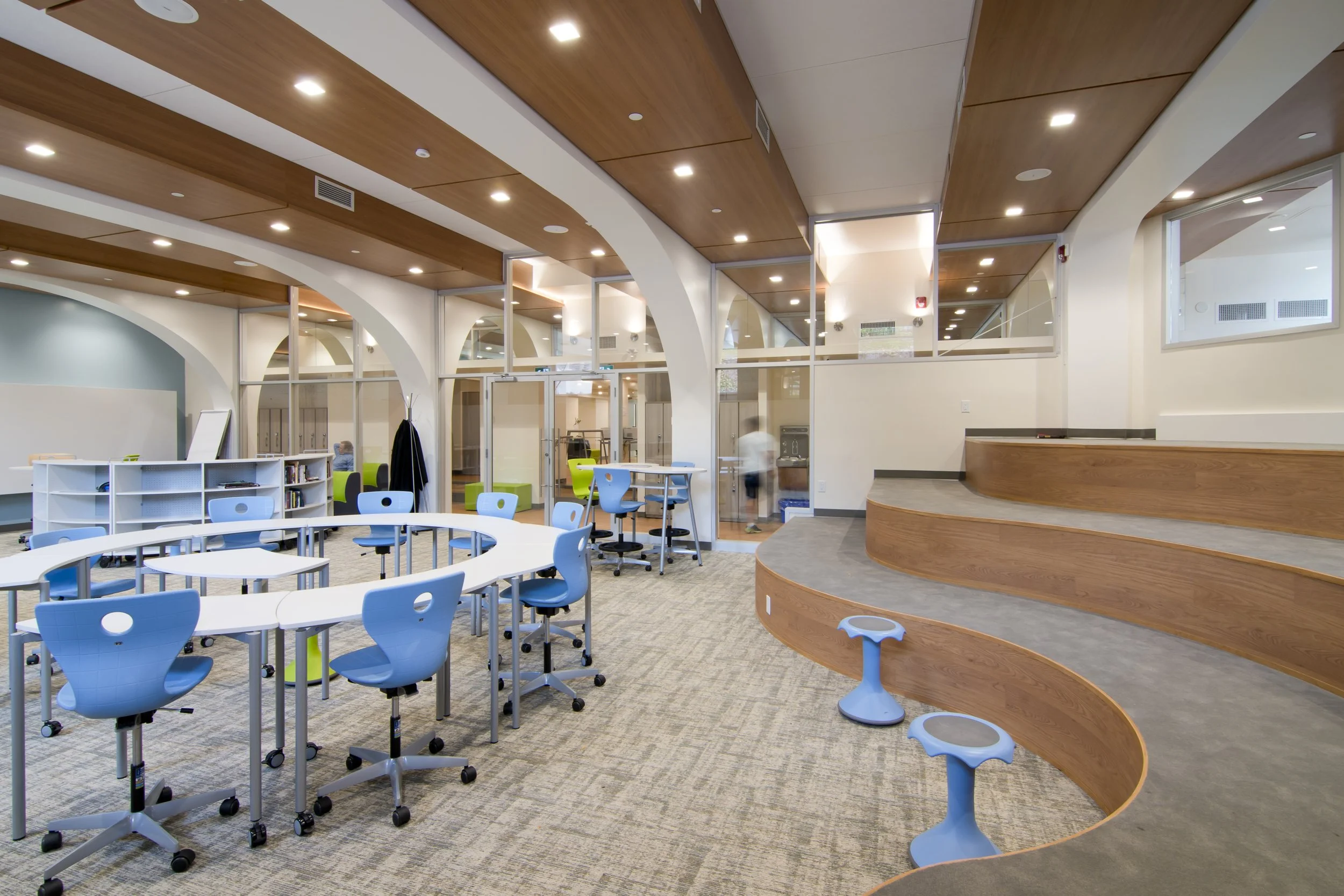
RSGC Junior School renovation, basement classroom, Tom Arban
The Shield is Royal St. George College’s official magazine, sharing insight on the independent school’s current events to families, students, and alumni. The Toronto all-boys school is undergoing a series of renovations to rejuvenate the downtown campus. The first of the phases included a junior school renovation and the conversion of the existing gymnasium into the now revered, timber-clad Ketchum Hall dining space. In the summer of 2026, the campus saw its second phase come to a conclusion with the completion of the arts centre, located in the historic St. Albans Church, and the new student commons.
The recent Shield publication turns to Tye Farrow for insight on how salutogenic – or health-causing – architectural design can enhance the health of students and staff in learning environments. Holding a master’s degree in Neuroscience Applied to Architecture from The University of Venice IUAV and pursuing a Doctorate in Public Health from the University of Toronto, Tye infuses neuroscientific research based in physiological and psychological health into the design of Farrow Partners projects.
“What we know is that spaces fundamentally shape the way we think, the way we learn, the way we interact, and the way we feel on a daily basis. There’s research out there—it’s coming together with the cognitive sciences, the neuroscience—that is connecting the dots with architecture on how it makes you feel and how it can make you feel better.”
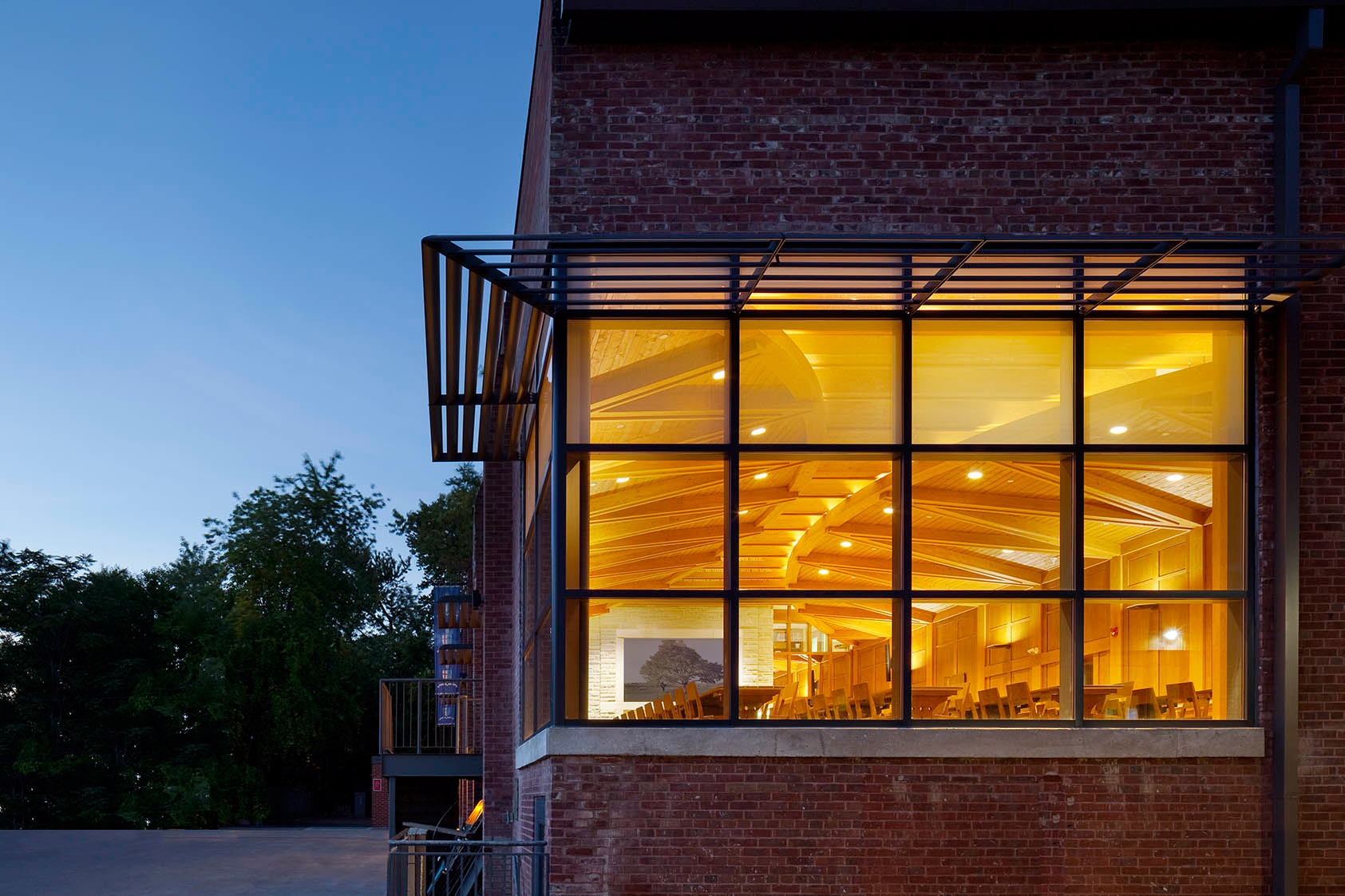
RSGC Junior School renovation, Ketchum Hall, Tom Arban
A study across 2000 classrooms and 21,000 students by Lisa Heschong, investigates the effects of daylight on student performance. The results of the study show that classrooms with the most daylight led to students progressing 20% faster on math tests and 26% faster on reading tests in one year.[1]Heschong’s study proves that environmental conditions can enhance the performance and wellbeing of students. Inviting natural daylight into learning spaces is a technique well-executed at the Royal St. George’s College renovation. The classrooms, art studios, and student commons draw light in through large windows and delicate clerestory openings to bring daylight inside, even in basement facilities.
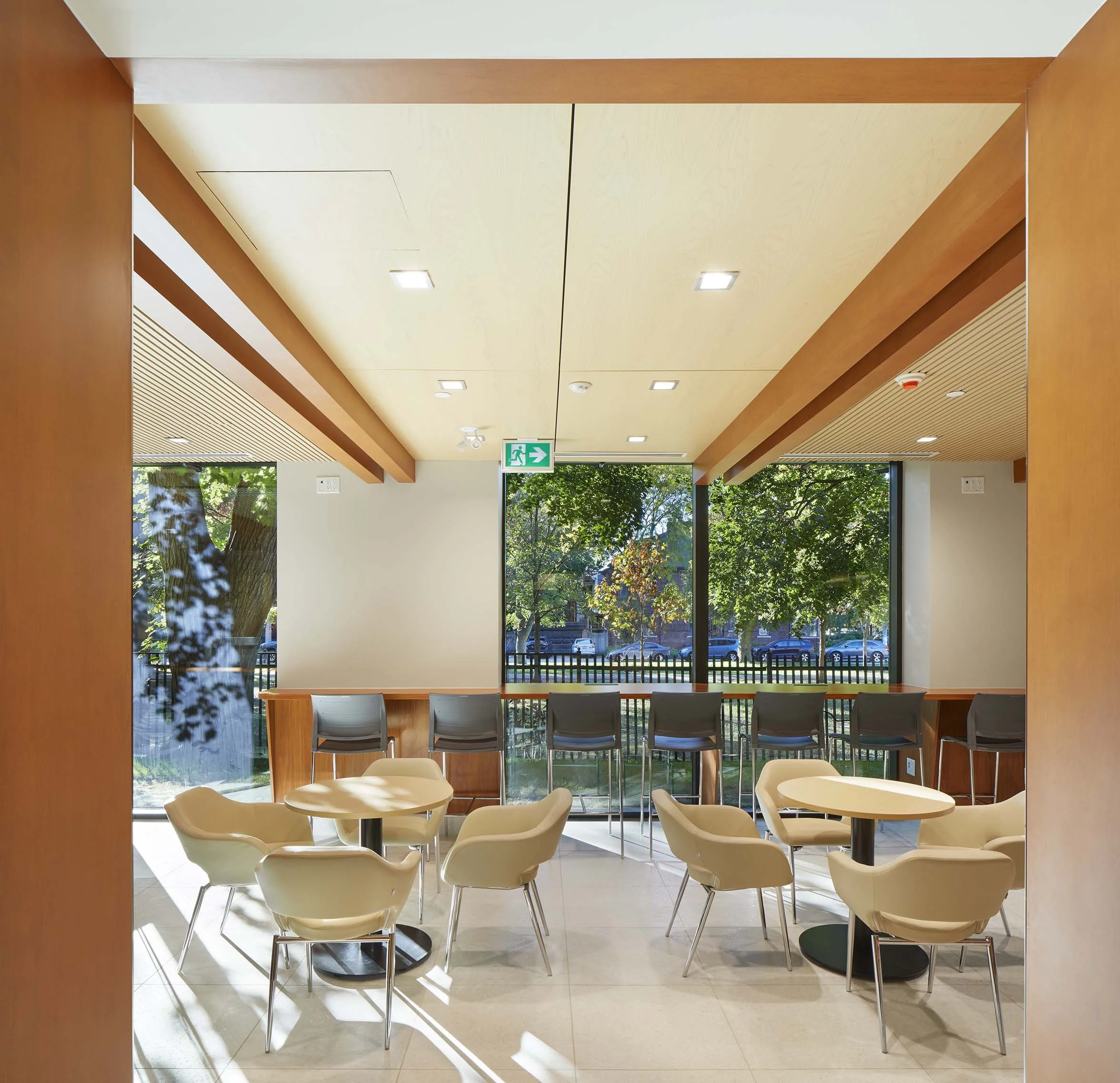
RSGC student commons, Tom Arban
Another study examines how the use of solid wood materials in classrooms improve student performance, in comparison to conventional finishes. Rooms with solid wood furnishing resulted in the decrease in student heart rates and stress levels.[2] At RSGC, wood materials populate the campus, with its most prominent use in the Ketchum Hall dinning room. Health and wellbeing of students is prioritised throughout the master plan, rejuvenating the campus chapter by chapter.
Stay up to date with the RSGC master plan renovation through our website, Instagram and LinkedIn as the historic independent school continues to develop into a salutogenic learning institution.
[1] Lisa Heschong, Daylighting in Schools: An Investigation into the Relationship between Daylighting and Human Performance: Detailed Report (Fair Oaks, CA: Heschong Mahone Group, 1999), [page number], https://files.eric.ed.gov/fulltext/ED444337.pdf
[2] Watchman, M., Potvin, A., and Demers, C. M. H. (2017). "Wood and comfort: A comparative case study of two multifunctional rooms," BioRes. 12(1), 168-182.